
Japan’s Ministry of Land, Infrastructure, Transport and Tourism and the New Energy and Industrial Technology Development Organization (NEDO) have launched a new project to develop a loading algorithm that will serve as the brain of baggage loading operations.
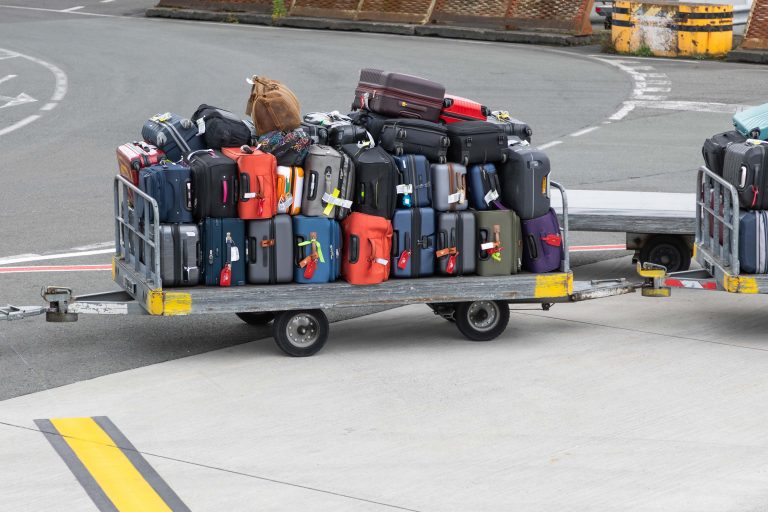
“Since each piece of baggage differs in shape, weight and material, there has been a lack of algorithmic technology to calculate and appropriately instruct on loading methods and sequences that prevent luggage from shifting,” NEDO said. “As a result, loading operations have so far relied mainly on the experience of skilled workers, posing a major challenge to automation.”
The project is part of a contest focused on improving the productivity of baggage loading operations at airports. Contests to develop baggage identification and a baggage loading robot have already been launched.
The latest contest aims to create algorithms that will become the ‘brains’ of future baggage loading robots. Proposals are invited from those with expertise in areas such as mathematical optimization, metaheuristics, reinforcement learning and physical simulation, as well as those interested in AI and data science, and students studying related fields.
The algorithm contest opened on July 7 and will close on October 19. An online information session will be held on July 14. The winner is due to be announced in early 2027 along with the winner of the baggage identification contest. NEDO plans to declare the loading robot contest winner in early 2028.
Related news, Stronger standards implementation, modern GSE and digitization needed to enhance ground handling, IATA says